Build on DAS Chain
A scalable, interoperable blockchain being built with the Cosmos SDK. Start building with modern tooling, clear documentation, and a developer-first approach as DAS Chain progresses through testnet toward mainnet.
Why Build on DAS Chain?
DAS Chain is designed as an application-specific Cosmos SDK network with a focus on modularity, interoperability, and gradual decentralisation. The features below reflect the current build direction and roadmap.
Cosmos SDK & CometBFT
Modular application design using the Cosmos SDK and CometBFT consensus. Built for predictable performance and clear upgrade paths.
Interoperable by Design
IBC connectivity enables cross-chain asset transfer and messaging across the Cosmos ecosystem, supporting multichain applications and collaboration.
EVM Compatibility (Roadmap)
Evaluation of Ethermint-based EVM support to enable Solidity smart contracts, subject to security review, implementation readiness, and governance approval.
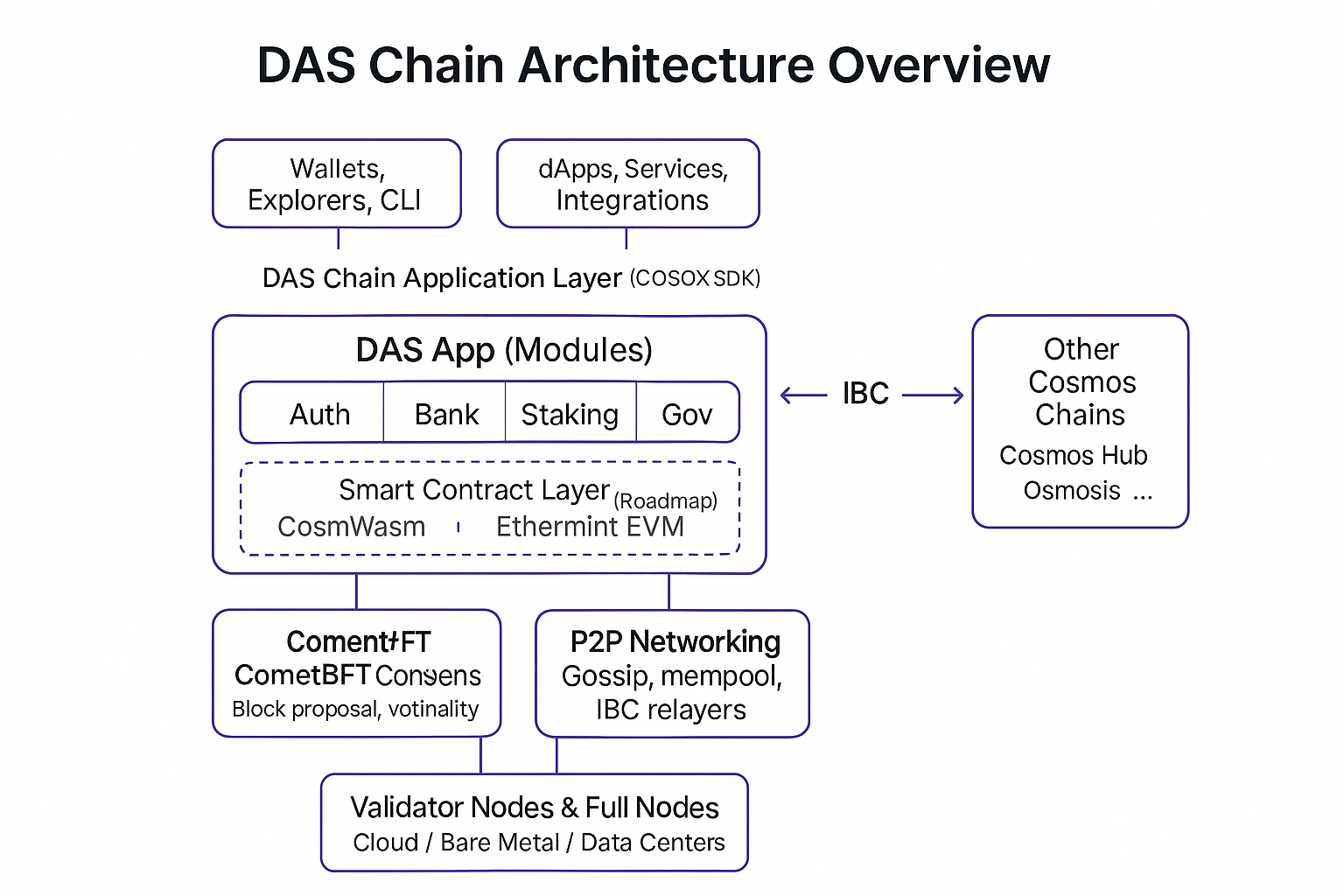
Architecture at a Glance
A high-level view of the Cosmos SDK application structure, networking and consensus layers, and interchain connectivity.
Developer Quick Links
Core resources for source code, local development, and community support. Items marked “Coming soon” will be published as testnet services go live.
GitHub
Access the DAS Chain source code, modules, build tooling, and development updates.
Install DAS Node
Run a local node for development and testing. Testnet instructions will be published when available.
API & RPC Endpoints
Public RPC, REST, and gRPC endpoints will be listed here once testnet infrastructure is published.
Developer Guides
Architecture notes, module patterns, and integration guides. Expanded documentation will roll out with testnet.
Testnet Faucet
A testnet faucet will be provided to obtain test tokens for development once the public testnet is live.
Discord
Developer Q&A, build support, announcements, and collaboration across contributors and validators.
Get Started with DAS Development
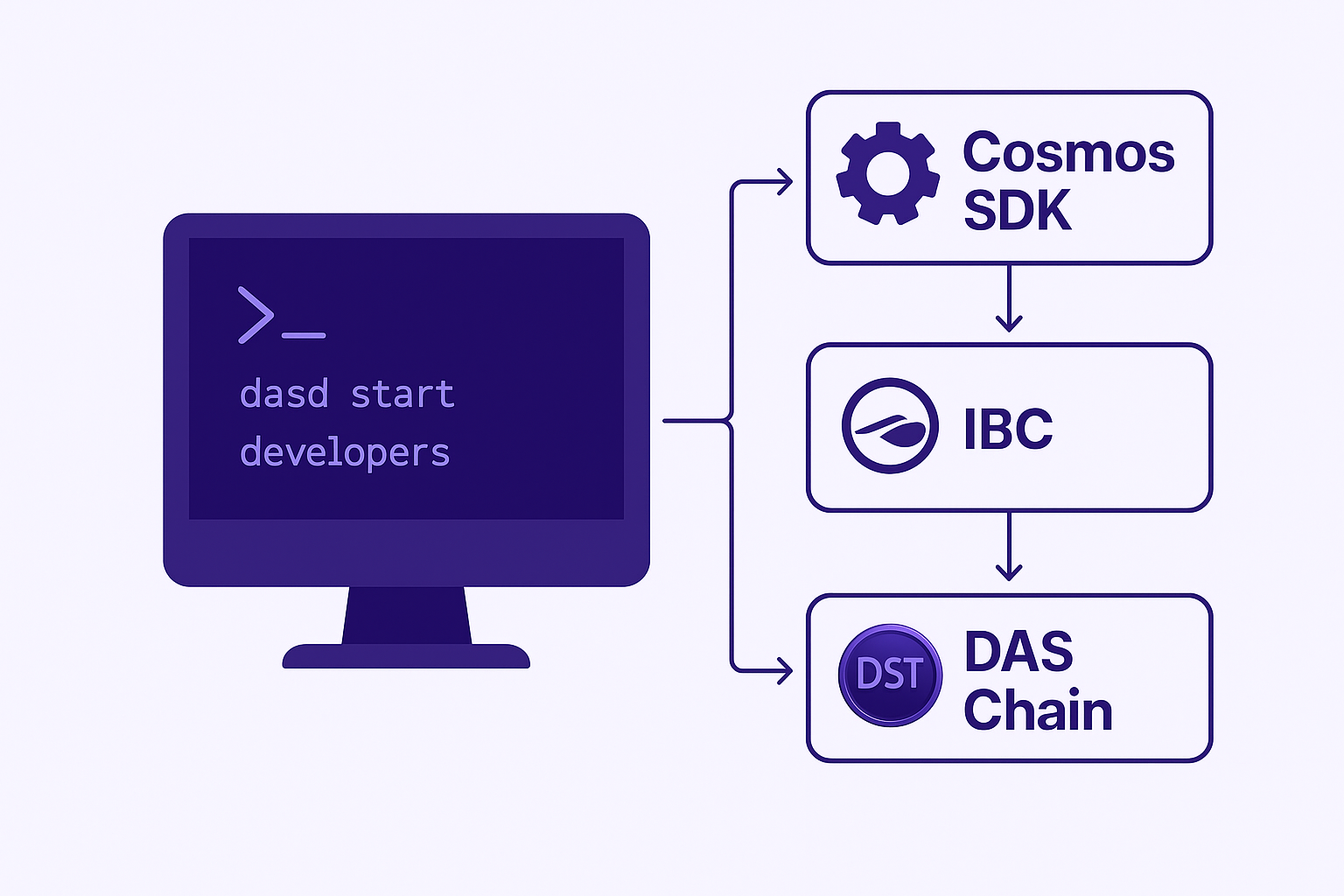
Install the CLI, build the chain locally, and begin interacting using command-line tools. These steps assume a Linux environment and are intended for local development.
Install Dependencies
Install Go and Ignite CLI.
# Install Go (example)
wget https://go.dev/dl/go1.22.0.linux-amd64.tar.gz
tar -xzvf go1.22.0.linux-amd64.tar.gz
export PATH=$PATH:/usr/local/go/bin

# Install Ignite CLI
curl https://get.ignite.com/cli | bashClone DAS Chain
Clone the repository and build the chain.
git clone https://github.com/daschain-foundation/das-chain
cd das-chain
ignite chain buildRun a Local Node
Initialise a local chain ID and start the node.
dasd init mynode --chain-id das-local-1
dasd startCreate a Wallet
Create a local developer key for testing.
dasd keys add developerCore Developer Features
The foundation is Cosmos SDK modularity and IBC interoperability, with smart-contract support treated as phased roadmap work.
Cosmos SDK Modules
Build and extend modules for accounts, staking, governance, slashing, and custom application logic.
IBC Toolkit
Enable cross-chain messaging and asset transfers with IBC-enabled networks when connections are configured.
CometBFT Consensus
Fast finality and deterministic performance using Byzantine Fault Tolerant consensus.
CLI & gRPC Interfaces
Interact via CLI now; publish REST/gRPC endpoint docs as testnet infrastructure is released.
CosmWasm (Roadmap)
Future support for CosmWasm smart contracts and tooling, subject to audit and phased rollout.
EVM via Ethermint (Roadmap)
Exploration of Ethermint-based EVM support to broaden developer access, subject to governance approval.
Developer Resources
Key references for building, running nodes, and tracking ecosystem services as they come online.
Source code and development history.
Local build + node run instructions.
Operational expectations and requirements.
DST design, allocations, and economic assumptions.
Process and parameters for proposals and voting.
RPC/REST/gRPC endpoints and usage notes.
Explorer link and network metadata when testnet is public.
Developer support and community collaboration.
Build on DAS Chain
Follow the repo, run a node locally, and join the developer community as the network progresses through phased releases and testnet validation.